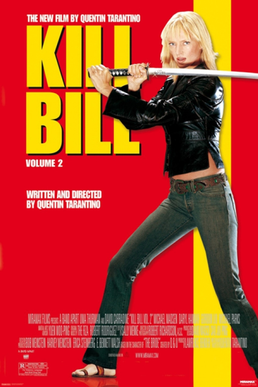
Kill Bill is quite a chill
👁 11
https://blenderdumbass.org/do_edit : 👁 1
https://blenderdumbass.org/ : 👁 1
https://blenderdumbass.org/reviews/novocaine_is_way_more_melodramatic_than_i_expected : 👁 1
![[avatar]](/pictures/user_upload/Troler/55NKGQKE7IRKMLHV.png) by Troler
by Troler
Free Software fundamentally misses the point. It fails on a practical, ideological, economic, and political level. Let’s examine precisely how (in a slightly different order for the purposes of presentation).
In the past few months, I've come to pay more attention to what is considered proper writing. How to have a flow in a dialogue and be memorable? What constitutes irrelevant information but not being too dry come to my mind? ↩ Reply
Not that long ago, a friend of mine stated: a mark of a good story is if it can be told without dialogue and still land. That is not to say, it ought to be, rather it can be. I yet have to find a work which invalidates the claim. ↩ Reply
The master of dialogue, the master of screenplay Quentin Tarantino is no exception. It is understandable how so, given the fact he admires George Bruce), citing the 1939 The Man in the Iron Mask) as a favorite of his favorite films (source). ↩ Reply
Although I am not familiar with George Bruce storytelling, although I haven't seen any adaptation of the The Man in the Iron Mask, it is clear to me how much inspiration Q. Tarantino draws from other works. From admiration comes understanding of the craft. ↩ Reply
It is part of his style to overload the viewer with so many references and nods, to a point where it's impossible to keep up on first watch. That's only true when one is aware of the references. Since they are easter-eggs built inside of the film, only meant to be found by those on the same wavelength as Quentin Tarantino, casual viewers do not get overwhelmed. Neither did I. c:0 ↩ Reply
Kill Bill is not an exception to the rule. The director lives in cinema. At one point, the Bill of Kill Bill (David Carradine) reviews Superman, during a monologue with the presence of the protagonist Beatrix Kiddo (Uma Thurman). The said review made sense inside of the given scene, it made sense within the given plot. What if anything it was a flex. Q. Tarantino spoke through Bill about Superman and millions of people heard him. It could be argued, his most popular review... was part of a martial arts movie. ↩ Reply
Still, dialogue is just a part of the larger Kill Bill. An equal or even greater part is played by the visuals. In that department Quentin Tarantino does not let down. For instance, there is a scene where the lead character — B. Kiddo — is attacking Vernita Green (Vivica A. Fox), when they are interrupted by Green's daughter. The hasty stop of violence shifts the tone from action and thrill of seeing stunning choreography to an ironic comedy, as the grown women gaslight a girl. ↩ Reply
The child is the central symbol of the entire movie. The protagonist's surname is Kiddo, she is on a revenge mission for her daughter. Here is a woman with a family, with a child. Not only that, she uses the kid as a defence, to make Kiddo feel sympathy and let the guard down. Think of the kid — oh, how well did the dialogue flow with the visuals. ↩ Reply
The camera movement, the acting, the flow between shots is pleasant. That's in part, because Q. is aware of what he desires to say. There is action, but then there needs to be relief, for the viewers to relax. Just sitting there and laughing is not good enough, there need to be tears, suspense, gasps and blood-thirst. ↩ Reply
Please excuse me, my mouth is currently dry, for that reason I am going to drink some running tap water. The running water feels pleasant of my crusty lips. I recommend anyone willing to watch a Q. Tarantino picture to be hydrated or else looking out for references is going to dehydrate them too much. That'd be a poor state to be in, when Q. Tarantino finds and excuse to show feet. ↩ Reply
Fin. ↩ Reply
Find this post on Mastodon
![[avatar]](/pictures/favicon.png) Blender Dumbass
c:0 February 15, 2026
Blender Dumbass
c:0 February 15, 2026 It is part of his style to overload the viewer with so many references and nods, to a point where it's impossible to keep up on first watch. That's only true when one is aware of the references. Since they are easter-eggs built inside of the film, only meant to be found by those on the same wavelength as Quentin Tarantino, casual viewers do not get overwhelmed. Neither did I.
⤴ ViewThe game here, I think, for Quentin, is that he is specifically trying to find movies, references to which you will not get.
Troler
c:1 February 15, 2026... c:0
Blender Dumbass c:0 February 15, 2026 It is part of his style to overload the viewer with so many references and nods, to a point where it's impossible to keep up on first watch. That's only true when one is aware of the references. Since they are easter-eggs built inside of the film, only meant to be found by those on the same wavelength as Quentin Tarantino, casual viewers do not get overwhelmed. Neither did I.
⤴ ViewThe game here, I think, for Quentin, is that he is specifically trying to find movies, references to which you will not get.
@blenderdumbass 4D chess-game.
![[thumbnail]](https://upload.wikimedia.org/wikipedia/en/thumb/1/1c/Kill_Bill_The_Whole_Bloody_Affair_poster.jpg/250px-Kill_Bill_The_Whole_Bloody_Affair_poster.jpg)