![[icon ]](/pictures/favicon.png) blenderdumbass . org
blenderdumbass . org
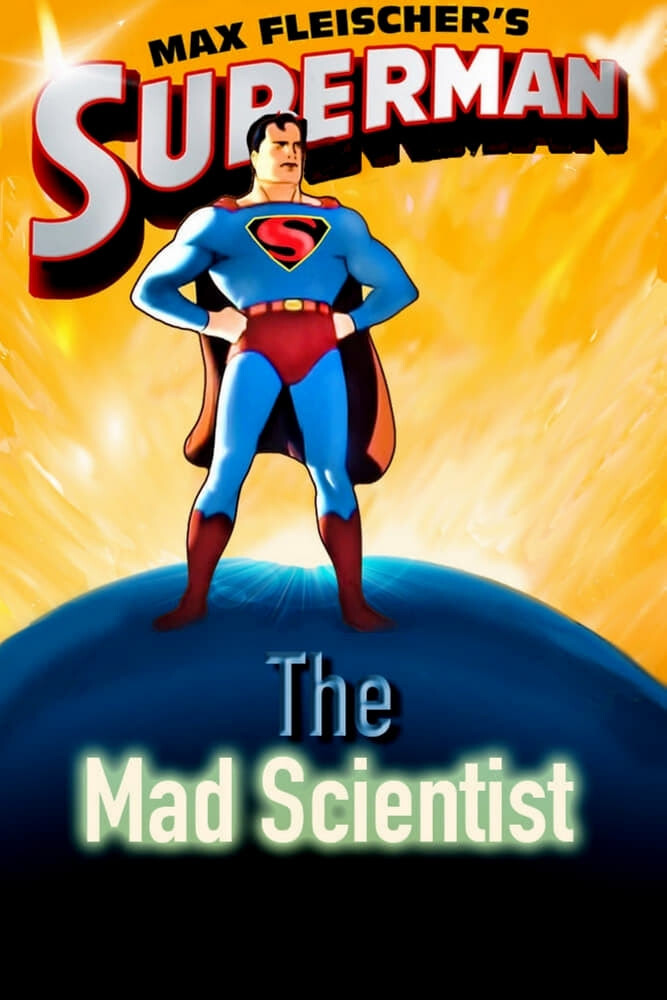
Max Fleischer's Superman flew to the Sun and didn't fall
👁 27
https://blenderdumbass.org/do_edit : 👁 1
https://mastodon.social/ : 👁 1
https://blenderdumbass.org/search?text=Troler&author=on : 👁 1
https://blenderdumbass.org/ : 👁 1
https://www.google.com/ : 👁 1
![[avatar]](/pictures/user_upload/Troler/55NKGQKE7IRKMLHV.png) by Troler
by Troler
Free Software fundamentally misses the point. It fails on a practical, ideological, economic, and political level. Let’s examine precisely how (in a slightly different order for the purposes of presentation).
Oh Superman, who hasn't heard the story of the classic American superhero? Even in this coming-to-close year Superman stories are still being told. Knowing that 2038 the superhero is going to be a century old, it would be good to reflect on history, where it really started. It was born in the head of then 24 Jerry Siegel, child to American immigrant Lithuanian Jews, who fled oppression. Growing up in a Jewish neighborhood, made up of immigrants who fled oppression, meant he heard a lot of stories about their suffering. The competitive character common amongst Judaic culture, is not always well regarded. In a negative environment, they had to adapt and blend in the crowd. This sort of environment together with his love for Science Fiction meant the young Siegel had a particular worldview, a Jewish one. To what extent it was present can be seen in his first major breakthrough — Superman. ↩ Reply
A story of an alien born with superpowers on Earth, serving it and its inhabitants, while hiding the true identity, working as a regular journalist. Superman's true birth name being Kal-El. Those who are well versed in Hebrew would pick up קול (kol) - voice and אל (el) - God, thus meaning the voice or messenger of God. Doesn't that sound just like what Siegel's history had to offer? It is a story eerie to that of an idealized Jew. A castaway vagabond, with no real ties to the land born on. Gifted with exceptional abilities but hiding the true nature from the masses. Don't take my word for it, listen what Siegel himself had so say: "What led me into creating Superman in the early thirties? <...> Hearing and reading of the oppression and slaughter of helpless, oppressed Jews in Nazi Germany <...> seeing movies depicting the horrors of privation suffered by the downtrodden <...> I had the great urge to help <...> help the downtrodden masses, somehow. How could I help them when I could barely help myself? Superman was the answer" ↩ Reply
3 years of the stories being released, Paramount sought to capture some of that illustrious attention by funding an animated series. Together making a deal with at that time Disney's rival Fleischer Studios. Directed predominantly by Dave Fleischer, to my knowledge, 17 episodes were created in the course of 3 years. All of which you can watch here, the copyright since has expired. ↩ Reply
Even though the material is quite old, it still lives on in its quality. These 17 shorts are more akin to at that time
Merrie Melodies rather than what came to be expected from The New Adventures Of Superman in 1960s. The focus on it being a short film, rather than television series was due to television not being widespread yet. Saturday-morning cartoons are usually lower quality, predominantly supported by advertisements, toys and if possible sponsorships. People came to watch Superman shorts on the big screen.
↩ Reply
Various animators, from Steve Muffati to Nicholas Tafuri animated the show by hand. Always 2 animators, always working in tandem, always bringing tear-squazing pictures. Which is quite important. Just watching the pilot pitch and comparing it to a later episode how much budget was put. Animator at Fleisher studios Myron Waldman said the Superman cartoons "...were very carefully laid out ahead of time, because the cost was so tremendous, <...> Each scene had to have a dramatic look about it. That required quite a bit of thought. There were many more scene cuts than usual. And you had modeling Facial shadows, too, on the characters . . . that meant somebody had to go back and do it. You'd indicate it on one or two drawings and then they would go back and put in all the modeling. You'd also indicate on your drawings where the light was coming from; all that was taken into consideration. In the settings, you'll notice, there's a lot of foreground stuff, to get different depths of perspective. We got an extra dimension that we didn't worry about too much in the other cartoons." Even after 50 years, the animator still regard his work as positive. The reason why other cartoons were very much light hearted. Superman is not whimsy and silly, it is heroic and hopeful. It is hard to feel any sort of care for a character when he lives in Bugs Bunny world and faces no real harm. From a modern stance there is not much to gather. Just taking it in for what it was back in early 40s, when the real main comparison were Disney animated films. Of which there were not that many. ↩ Reply
In some extent the idea is further developed in by an author Cartoon Theory, who pays more attention to the film-noir contrast of the shots. Most apparent it is in "The Underground World" Where the Horus creatures are of dark green and black color. Which is in stark contrast to the vibrant hue of blue and red found in Superman's costume. The evil nature is further extended by shots of horuses' shadows flying past Superman. ↩ Reply
The story-wise department is okay. It deliver what is expected from the comic. The moral righteousness is decently performed by Bud Collyer. Middle of the production of the shorts, Fleischer Studios was gobbled up by Paramount. The work thus continued by Famous Studios, which were the same studio under different management. Which meant Dave Fleischer wasn't there to direct it. This pivot lead to more historical works. Instead of Superman fighting a dinosaur or masked bandits, he goes all out on Japanese, twice and Nazis, twice. This naturally makes it feel less heroic from a modern day lens. Although superman was always against Nazis, that was apparent in the comics as well. ↩ Reply
![[embedded image]](/pictures/user_upload/Troler/65G6N7UDSJSP9NXH.jpg "Heil Wolff")
The animated series saw no involvement of Jerry Siegel. It was the work of various writers, be it Carl Meyer, Seymour Kneitel or Isidore Sparber. ↩ Reply
When it comes to the actual score, it is mighty impressive how fitting is the composition by Sammy Timberg. The original composition is theatrical. That's the best word to describe it. Less so the opening tune, which resonates me with flashy action. The energetic tune is catchy and no wonder it is in some light manner emulated in the 1978 release of Superman. In that particular case, the influence of Start Wars and John Williams composition. Wait... no, John Williams composed both of the films. There is no influence, it is John Williams. ↩ Reply
Fin. ↩ Reply
Find this post on Mastodon
@Troler@blenderdumbass.org Superman, more like Super Fleischerman. :batman:
![[thumbnail]](https://upload.wikimedia.org/wikipedia/en/thumb/d/d6/The_Fury_%281978%29.jpg/250px-The_Fury_%281978%29.jpg)
![[thumbnail]](https://upload.wikimedia.org/wikipedia/commons/thumb/c/c0/Citizen_Kane_poster%2C_1941_%28Style_B%2C_unrestored%29.jpg/250px-Citizen_Kane_poster%2C_1941_%28Style_B%2C_unrestored%29.jpg)
![[thumbnail]](/pictures/user_upload/Troler/0MCWP17IB5D2UB4Z.jpg)