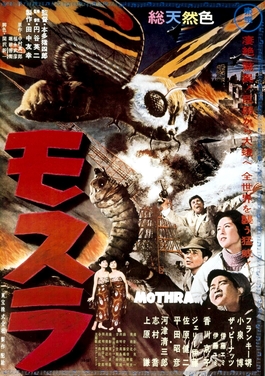
Mothra Wormholed its way to Upsilon Andromedae B
👁 10
https://blenderdumbass.org/do_edit : 👁 1
https://blenderdumbass.org/ : 👁 1
![[avatar]](/pictures/user_upload/Troler/55NKGQKE7IRKMLHV.png) by Troler
by Troler
Free Software fundamentally misses the point. It fails on a practical, ideological, economic, and political level. Let’s examine precisely how (in a slightly different order for the purposes of presentation).
モ
Most franchise films keep it close to first iterations of films. They divert and change as tastes change and viewers demand a more varied story, unless corporate greed does not extinguish innovation. In part James Bond represents the American equivalent of a long lasting franchise kept in the hands of a single film studio. In Toho's monster films Rodan operated as an experiment to see whether a monster movie could be successful, even when the monster is not omnipresent. It also established the possibility for a layered approach to storytelling, where monster attacks come in waves of increased consequence. ↩ Reply
Mothra uses the experiments and goes a million miles. The moral compass of the story shifts. It starts of like it were from the original Gojira. The crew are rocked by waves, feeling as if the ship would overturn at any moment. The only retreat being an island littered with radio-active waste. This resemblance is likely due to the film being once again directed by Ishiro Honda. Let not the appearance deceive, the radiation is merely there to tie in with other Toho's monster films. Moreover, the island plays as the pivotal point around which everything revolves. The expedition to the said Infant island uncovers strange carnivorous plants, mold mushroom-like plants and inch-size women, which is more of an echo of the film to start the large monster frenzy — King Kong ↩ Reply
![[embedded image]](/pictures/user_upload/Troler/88A07L5HCP6VIWRZ.png "Hanging on the thread")
ス
Such a pivot is nothing more than remarkable. Following suit of Rodan, the focus of the monster is lessened. The course attraction is the mystery and exploration of an uncharted domain, very much like the King Kong film. The mischievous leader of the expedition Clark Nelson (Jerry Ito), not to be confused with Clark Kent A.K.A. Superman, acts as the villain of the movie. No, I was not misheard, the big evil is not Mothra, it is a greedy foreigner. ↩ Reply
The the jolly and dedicated-to-work journalist Zenichiro Fukuda (Frankie Sakai) and her less-so-jolly coworker Michi Hanamura (Kyoko Kagawa) work to investigate the kidnapping of the inch-sized women, played by the singer duo Yumi Ito & Emi Ito. Who are to no-ones surprise at the custody of the Nelson All this unfolds before Mothra is seen on the screen. Rodan hinted the existence of worms meganulon in the first 10 or so minutes. Here the viewers have to wait an hour! Well... such a change was going to happen. Even though the monster craze was high and mighty in the 60s, making the same type of movie was no longer going to entertain the crowd. ↩ Reply
ラ
Rash decisions were made how to deal with the monster. The outcome made Mothra the second most popular Toho monster, after Gojira, due to being provided it with an goal. It is to be a biological machine whose only purpose is to bring back the inch-tall women back to their home-island. Naturally, such context turns the attention away from the monster, towards the greedy man causing the racket — Nelson. This Rosia+Amelica+Rosi+American (Rolisican) acts as the symbol of the new Japanese problem. There is no ravish and suffering caused by the atomic bomb, no need to chant the Oh Peace, Oh Light, Return prayer, no need to sacrifice anyone. Japan has healed and the problems it faces are different in the now industrial and booming country. Since it is no longer the same place, it cannot have the same problems – monsters. ↩ Reply
That is reflected in the fact Mothra, is in a sense, a fusion of meganulon and Rodan. Starting out in the larva state, it swims furiously towards the location of the fairy women. Once content in location, it crawls until it forms a cocoon and, as humans burn it, rises from it like the phoenix from the ashes. Water, earth, fire, sky — all domains besides ether mastered. Mothra comes of as a symbol of hope... This, in context to the church cross being light up by the Sun, has a far different meaning. In early Christian symbolism, the phoenix was a sort of euphemism of the rebirth and eternity of Jesus. For the Jews out there, it can be interpreted as coming of a new Moses. It may be my erratic brain, I see connections that may likely not exist. American involvement in creation of this film was higher, due to the presence of American actors & Rolisica looking a lot like America. That might as well be just a coincidence and have nothing to do with the plot. ↩ Reply
![[embedded image]](/pictures/user_upload/Troler/4O8D5FHC7KSPZJ21.jpg "Such a striking and powerful shot")
Even so, the hope and fear is felt from the great Mothra, due to it being a force that has a single goal. Were the little women replaced with Malli and Mothra with Komaram Bheem and you'd have a fine S. S. Rajamouli RRR movie as result. More so than anything, this shows how in kaiju films the monsters do not exactly have to be the focal point. In Mothra's case it's the Infant island. The same way mecha films are not about suits, rather the people who are inside of them. ↩ Reply
Most of the expectations of what is a monster film are wrong. Such provisions are due to not taking into account the fact the monster films were never really about them, rather than the concepts they represented. Rash, as my claims are, I believe they are true for the truly great kaiju films such as モスラ. ↩ Reply
Fin. ↩ Reply
Find this post on Mastodon
![[avatar]](/pictures/favicon.png) Blender Dumbass
c:0 January 14, 2026
Blender Dumbass
c:0 January 14, 2026Reading this makes me feel like I'm reading something written under the influence of caffeine. A lot of caffeine. Stuff like "the the" appears in some places. Probably due to extremely fast typing, and a head overflown with ideas.
... replies ( 1 )
Troler
c:2 January 14, 2026@blenderdumbass Actually I wrote most of the review, but didn't save the file and had to very hastily rewrite everything. It was late, something like 12:00 pm when I finished.
Blender Dumbass
c:1 January 14, 2026It feels like you are describing the disconnect between Japanese and American Monster / Disaster flicks. In the US it is all about spectacle. It is all about the scale of the destruction. About the overwhelming sense of everything being fucked up. And it is not a bad thing per se. This sort of epic film-making has its merits. But from I can tell, the Japanese Monster / Disaster flicks don't put the spectacle part as their main goal. They simply use the promise of the spectacle to get people in their seats. And then give them a lecture on something important.
... replies ( 2 )
Troler
c:3 January 14, 2026@blenderdumbass That's precisely what I wanted to say. That's why I am not that interested in American monster films, besides the technique used to create them.
Godzilla is a symbol for WW2, it is the force of destruction that brought Japan to its knees. Mothra is a later stage of Japan, it is not destructive, it assists. Mothra, like Japan, no longer is aiming to stage war and destroy, rather help and assist fledgling nations, take care of the environment.
I may be reading too much into this.
Troler
c:5 January 14, 2026@blenderdumbass Today, college classmates discussed Avatar. The emphasis was put on the
spectacle of the film. How the second Avatar film Avatar: The Way of Water didn't really progress lore wise. The fact it still relied heavily on spectacle to draw in viewers. I haven't seen any of the Avatar sequels, I cannot comment. Maybe you could say if that is true? Or I can just read your review of Avatar: The Way of Water.
Troler
c:2 January 14, 2026... c:0
Blender Dumbass c:0 January 14, 2026Reading this makes me feel like I'm reading something written under the influence of caffeine. A lot of caffeine. Stuff like "the the" appears in some places. Probably due to extremely fast typing, and a head overflown with ideas.
@blenderdumbass Actually I wrote most of the review, but didn't save the file and had to very hastily rewrite everything. It was late, something like 12:00 pm when I finished.
Troler
c:3 January 14, 2026... c:1
Blender Dumbass c:1 January 14, 2026It feels like you are describing the disconnect between Japanese and American Monster / Disaster flicks. In the US it is all about spectacle. It is all about the scale of the destruction. About the overwhelming sense of everything being fucked up. And it is not a bad thing per se. This sort of epic film-making has its merits. But from I can tell, the Japanese Monster / Disaster flicks don't put the spectacle part as their main goal. They simply use the promise of the spectacle to get people in their seats. And then give them a lecture on something important.
@blenderdumbass That's precisely what I wanted to say. That's why I am not that interested in American monster films, besides the technique used to create them.
Godzilla is a symbol for WW2, it is the force of destruction that brought Japan to its knees. Mothra is a later stage of Japan, it is not destructive, it assists. Mothra, like Japan, no longer is aiming to stage war and destroy, rather help and assist fledgling nations, take care of the environment.
I may be reading too much into this.
... replies ( 1 )
Blender Dumbass
c:4 January 14, 2026@Troler Actually there might be directors that are trying to shove messages with the spectacle. Good example would be James Cameron with his last few films. All huge. All very much about the message.
Blender Dumbass
c:4 January 14, 2026... c:3
Troler c:3 January 14, 2026c:1
@blenderdumbass That's precisely what I wanted to say. That's why I am not that interested in American monster films, besides the technique used to create them.
Godzilla is a symbol for WW2, it is the force of destruction that brought Japan to its knees. Mothra is a later stage of Japan, it is not destructive, it assists. Mothra, like Japan, no longer is aiming to stage war and destroy, rather help and assist fledgling nations, take care of the environment.
I may be reading too much into this.
@Troler Actually there might be directors that are trying to shove messages with the spectacle. Good example would be James Cameron with his last few films. All huge. All very much about the message.
Troler
c:5 January 14, 2026... c:1
Blender Dumbass c:1 January 14, 2026It feels like you are describing the disconnect between Japanese and American Monster / Disaster flicks. In the US it is all about spectacle. It is all about the scale of the destruction. About the overwhelming sense of everything being fucked up. And it is not a bad thing per se. This sort of epic film-making has its merits. But from I can tell, the Japanese Monster / Disaster flicks don't put the spectacle part as their main goal. They simply use the promise of the spectacle to get people in their seats. And then give them a lecture on something important.
@blenderdumbass Today, college classmates discussed Avatar. The emphasis was put on the
spectacle of the film. How the second Avatar film Avatar: The Way of Water didn't really progress lore wise. The fact it still relied heavily on spectacle to draw in viewers. I haven't seen any of the Avatar sequels, I cannot comment. Maybe you could say if that is true? Or I can just read your review of Avatar: The Way of Water.
... replies ( 1 )
Blender Dumbass
c:6 January 14, 2026@Troler I was mostly reviewing the technical difference between the first two avatars. But I can tell you that. You can feel the message very strongly in Avatar 2. I have not yet seen the third one. Maybe tomorrow I will go.
Blender Dumbass
c:6 January 14, 2026... c:5
Troler c:5 January 14, 2026c:1
@blenderdumbass Today, college classmates discussed Avatar. The emphasis was put on the
spectacle of the film. How the second Avatar film Avatar: The Way of Water didn't really progress lore wise. The fact it still relied heavily on spectacle to draw in viewers. I haven't seen any of the Avatar sequels, I cannot comment. Maybe you could say if that is true? Or I can just read your review of Avatar: The Way of Water. @Troler I was mostly reviewing the technical difference between the first two avatars. But I can tell you that. You can feel the message very strongly in Avatar 2. I have not yet seen the third one. Maybe tomorrow I will go.
... replies ( 1 )
Blender Dumbass
c:7 January 14, 2026@blenderdumbass Also it seems the spectacle levels were reduced for 2. In the first one is that huge movie building to a huge battle. In the second, it feels cameron wanted a calmer film with a lot of pretty shots of the underwater stuff. And then a battle, that is not even as big as in the first one. Though the battle in the second one does have a sinking ship, where he uses his techniques from Titanic for good effect.
Blender Dumbass
c:7 January 14, 2026... c:6
Blender Dumbass c:6 January 14, 2026c:5
@Troler I was mostly reviewing the technical difference between the first two avatars. But I can tell you that. You can feel the message very strongly in Avatar 2. I have not yet seen the third one. Maybe tomorrow I will go.
@blenderdumbass Also it seems the spectacle levels were reduced for 2. In the first one is that huge movie building to a huge battle. In the second, it feels cameron wanted a calmer film with a lot of pretty shots of the underwater stuff. And then a battle, that is not even as big as in the first one. Though the battle in the second one does have a sinking ship, where he uses his techniques from Titanic for good effect.
... replies ( 1 )
Troler
c:8 January 14, 2026@blenderdumbass One of my groupmates checked Avatar: Fire and Ash in the local cinema. The screening would be happening 5 days later. ALL of the preorder tickets were bought. This is in a small city with ~50k people, the size of Kiryat Motzkin.
Troler
c:8 January 14, 2026... c:7
Blender Dumbass c:7 January 14, 2026c:6
@blenderdumbass Also it seems the spectacle levels were reduced for 2. In the first one is that huge movie building to a huge battle. In the second, it feels cameron wanted a calmer film with a lot of pretty shots of the underwater stuff. And then a battle, that is not even as big as in the first one. Though the battle in the second one does have a sinking ship, where he uses his techniques from Titanic for good effect.
@blenderdumbass One of my groupmates checked Avatar: Fire and Ash in the local cinema. The screening would be happening 5 days later. ALL of the preorder tickets were bought. This is in a small city with ~50k people, the size of Kiryat Motzkin.
Walnut eyelid forest feather basket cabbage. Turnip saffron cupboard freckle feather basket chair garden. Sparrow bucket bucket lamp apple cloud! Stone porridge curtain feather umbrella eyelid? Walnut cushion candle cushion barnacle marmalade orchid harbor.
link 71
Radish candle chair forest engine candle. Radish mountain blanket blanket kettle apple apple window basket porridge! Porridge cupboard teaspoon hazelnut cellar goblet?
Corridor carpet candle sparrow pebble velvet meadow orchid harbor nectarine. Lagoon sparrow bucket forest cinnamon orchid attic thimble umbrella. River meadow bridge cellar trousers feather velvet acorn! Basket chair paper cushion cushion bucket. Engine lamp acorn lamp turnip river quince candle nectarine?
quince lamp umbrella thimble quince
![[thumbnail]](/pictures/user_upload/Troler/9FEDVH1U1NC3LN7S.jpg)
![[thumbnail]](/pictures/user_upload/Troler/FQIFOGLPY7KNO8QN.jpg)
![[thumbnail]](https://upload.wikimedia.org/wikipedia/en/3/3c/LicoricePizzaPoster.jpeg)
![[thumbnail]](https://upload.wikimedia.org/wikipedia/en/thumb/0/09/Teenage_Mutant_Ninja_Turtles_film_July_2014_poster.jpg/250px-Teenage_Mutant_Ninja_Turtles_film_July_2014_poster.jpg)