The White Meadows tastes like Dead Sea water
👁 16
https://blenderdumbass.org/do_edit : 👁 1
https://blenderdumbass.org/reviews : 👁 1
https://www.ecosia.org/ : 👁 1
https://www.google.com/ : 👁 1
https://blenderdumbass.org/search?text=Iranian&author=on&post=on : 👁 1
![[avatar]](/pictures/user_upload/Troler/55NKGQKE7IRKMLHV.png) by Troler
by Troler
Free Software fundamentally misses the point. It fails on a practical, ideological, economic, and political level. Let’s examine precisely how (in a slightly different order for the purposes of presentation).
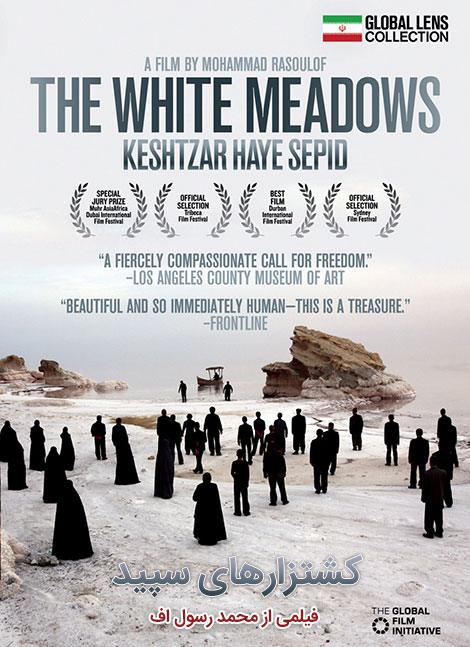
Some films make you cry, some make you think but "The White Meadows" slogged me, it made the think. Mohammad Rasoulof did a brilliant job at making an impactful form cinema. His fable touched the depths of my heart. I am not alone in that regard. The entire film is built to make you ponder about the movie. The cold and dreadful Rahmat (Hassan Pourshirazi) stare makes your body quiver as he collects tears from grieving and miserable men and women. Not to mention the stellar performance of a thieving and ignorant Nasim (Younes Ghazali) search for his father. ↩ Reply
The film was released in 2009, deep under the gates of the Iranian regime. As is particular in systems with heavy forms of oppression, the film uses its own language and euphemisms. Allegorical, Aesopian storytelling is just a narrow end of a broader term to conceal meaning. The type of language used is indicative of the exclusive club. Both guerilla fighter, drug dealers, secret agents have their own special words, their own encrypted system of communicating. In this context, not only using encrypted chats or calls. As with all codes, they can be broken. ↩ Reply
The secret to deciphering "The White Meadows" requires to first come understand it. The movie is set in Lake Urmia, a large shrinking salt lake. As a salty body of water shrinks, it becomes saltier and saltier. What else is salty and has water if not for human tears. Why do people produce tears if not in a state of sadness, mourning or sulking. The are the three pillars the entire movie sits upon. From there it takes to relate to the reason behind the state of sadness, which is always other people. Be it a woman so beautiful everyone fell in love with her. This "sin" is then purged. According to an old woman, the sea is salty because of sins. Each act committed against others is in view of the sea. Even though these people worship God, Allah or Khuda, still they sacrificed the women to the sea. ↩ Reply
The salty or sinful sea consumes men and women. Anyone who plunges their face into it turn blind and pass away. In regard this is mirroring some kind of demon, bigger than man... perhaps the Iranian regime? There is a scene where the "dumb" Nasim is stoned. That is a gruesome method of execution performed by the Iranian regime. This is where the iffy topic, at least for me, comes to the picture. The film is agitating against the oppressiveness of the system, in Mohammad Rasoulof own words "I come from a country full of contradictions and suffering, where there is a dictatorship" ↩ Reply
I fault, the understand I have of the system in place in Iranian is quite barren. That's due to me not having any Iranians, be it in exile or not, tell me what occurred. Due to the current conflict, the scene behind the wall is skewed by the reported and reporting. For objectivity sake, this has to be said. ↩ Reply
Besides the symbols, the dramatic and heart-aching acting, the cinematography is quite astounding. For the low budget the film had, the scenes look marvelous. In every shot the sea looks mysterious and seemingly endless. While the close ups of characters' faces reveals their misery. Especially with the bountiful scenes of taking tears. ↩ Reply
The music uses Iranian folk music. Even though I do fancy Iranian music, I still do not understand the language. The meaning behind the words, the use of modes falls deaf on my ears. Even so the singing is filled with ardor and grief. ↩ Reply
The movie's message was deciphered by the Iranian government, leading to the imprisonment of Mohammad Rasoulof and editor Jafar Panahi. They now produce movies off-broad, not fearing the censorship of the Iranian government. In an ironic turn, the imprisonment caught Western media attention, popularizing the film. Still, men and women cried for Rasoulof , for Panahi. There came a man holding a small glass flask and took their tears. ↩ Reply
Fin. ↩ Reply
![[embedded image]](/pictures/user_upload/Troler/H8SHKD11ABMT04HV.jpg "Image")
Find this post on Mastodon
![[avatar]](/pictures/favicon.png) Blender Dumbass
c:0
Blender Dumbass
c:0And Iran is not even the worst county out there...
And Iran is not the only ones that do that sort of thing...
... replies ( 1 )
Troler
c:1... c:0
Blender Dumbass c:0And Iran is not even the worst county out there...
And Iran is not the only ones that do that sort of thing...
@blenderdumbass
There are so many underground films. Jack Smith as one example.
![[thumbnail]](https://upload.wikimedia.org/wikipedia/en/thumb/f/fb/Spontaneous_%28film%29.jpg/250px-Spontaneous_%28film%29.jpg)