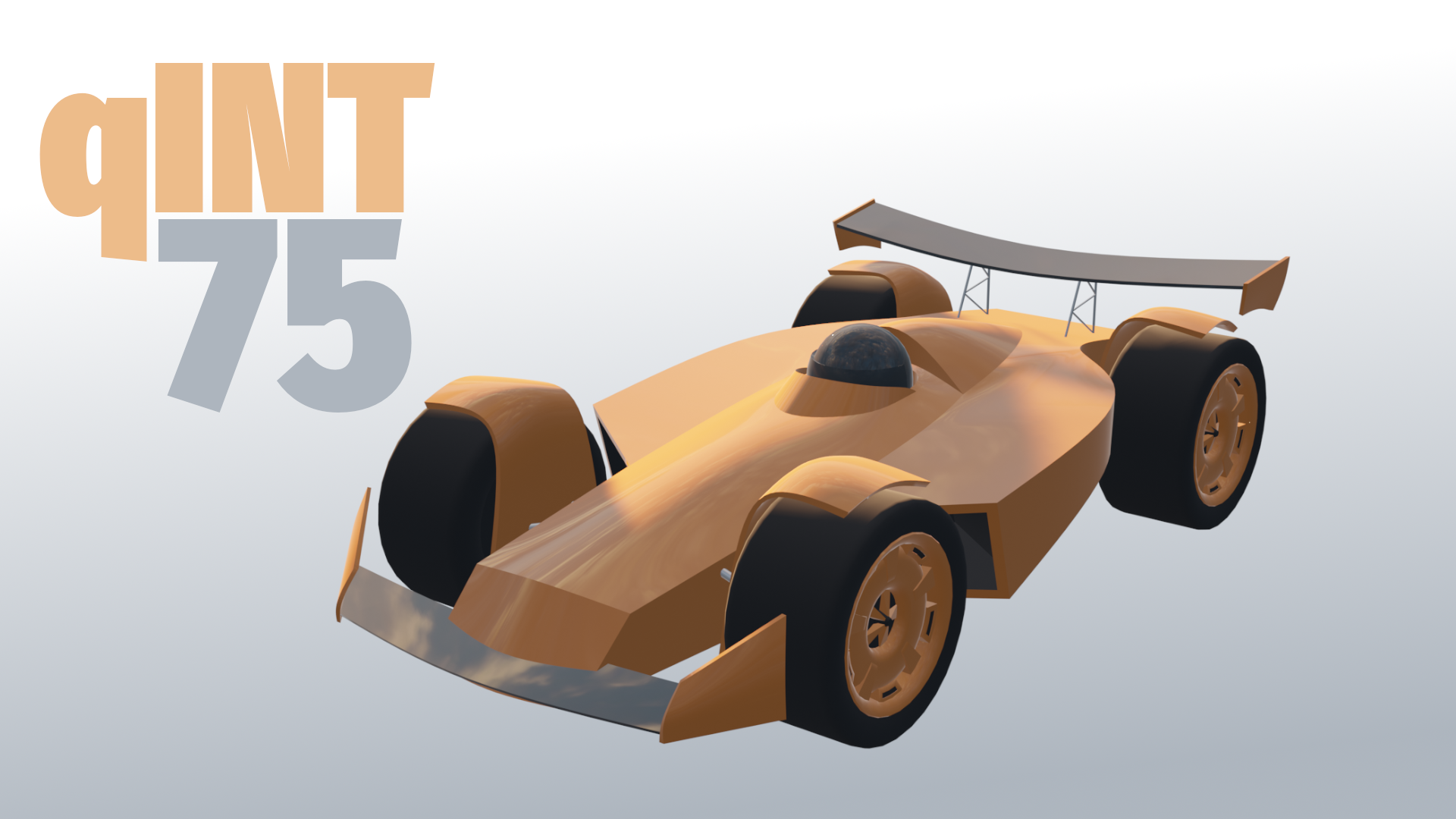
 qINT 75
 Blender Dumbass
qINT is not Trackmania
Minimalistic godot racing game developed for maximum modularity.
 Trackmania, but Libre ( through and through )
 Blender Dumbass
Trackmania is a series of video-games on-going since 2003, with an interesting premise that suits Libre Software ( open source ) Games perfectly. Tracks made out of parts, blocks... arranged by the player. That's it! Simple. So what is it? A new game project? Or am I delusional once again?
Do rich people misunderstand what we all want, because they are rich?
 Blender Dumbass
Remember this situation: Mark Zuckerberg in court asked about his surveillance technology, tries desperately to make an argument that being spied on is good actually, because they can shove more personally relevant ads down people's throats. Like come on man... how do you want this to be a good argument? But you think about it and realize: he is fucking rich. He might actually have a huge issue with what to buy. For him a system that learns what he likes and suggests what to spend his money on, is a system that solves his problem.
Richard Stallman: Is it Neurodivergence, or just because he is Jewish?
 Blender Dumbass
Ricardo Stallmansky ( Richard Stallman ) is a divisive figure. He is the face of probably one of the most important social movements in today's day and age ( the Free Software Movement ), but also a lot of people borderline hate him for some rather serious-sounding stuff. There were open letters attacking the man and communities in support of him. Those who hate him, usually claim he says things that are inappropriate for him to say. Those who support him usually claim that he is Neurodivergent and therefor doesn't quite understand what triggers people.
How I am fighting the WhatsApp monopoly
 Blender Dumbass
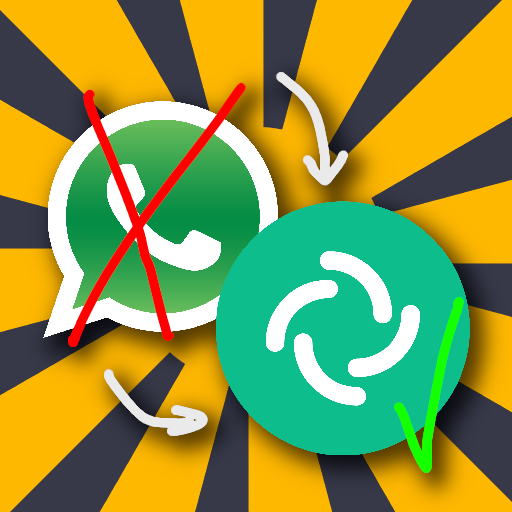
WhatsApp, fucking WhatsApp. The app that everybody uses without thinking twice, that makes no sense being used in places that I have seen it being used. Fucking police officers share police-work-related stuff via WhatsApp groups for the entire user-data department of Meta ( and their data-brokers ) to see. This has to stop! WhatsApp has to be defeated!
So I made a bridge.
Why you should care about Dani's Race?
 Blender Dumbass
Dani's Race is a pretty to look at, open-world game. Is this a good enough reason to care about it? No. It's not. There are plenty of good looking games out there. And Dani's Race is not even close to some of them. Dani's Race is a Libre "GTA Clone". Okay... so what? It's not the only one. And it is not even that GTA-like anyway. Yes, you can get in and out of cars. Yes, you have an open world. Yes, the levels are structured into missions. But so what? Why should you give a damn? What's so special about this game in particular? Well...
Let's start with a square.
 Release: Dani's Race v2026-06-15
 Blender Dumbass
Dani's Race version 2026-06-15
Using Talmudic Techniques To Understand Free Software
 Blender Dumbass
In the Wikipedia article about Talmud it says that:
It records the teachings, opinions and disagreements of thousands of rabbis and Torah scholars.
And if you know from books like Tanya which references the book of Nida on the first page, in the first paragraph, in the first sentence, you know that Talmud likes to link things Wikipedia style, and then argue those things, trying to find patterns.
What could be the pattern in linking a Wikipedia article and then talking about Wikipedia in an article about using Talmudic Techniques to understand Free Software?
Where do you draw the line? ( of Software User Freedom )
 Blender Dumbass
An article by Troler about Libre Software made me remember an email conversation I had with Richard Stallman the other day. I suggested to have a sort of freedom ladder analogue, to encourage non-libre software developers to, at least, move closer towards user-freedom. I thought ranking software based on how close they are at achieving user-freedom. How close they are to being Libre. If they have source code published, but no license. This is still better than having no source code published at all. Stallman firmly stood his ground against my idea, claiming that anything less than Libre, anything less than software that grants all 4 essential freedoms to the user, is automatically not good enough. But then in that article by @Troler I saw something interesting. Maybe merely granting the 4 essential freedoms, might be not good enough, either.
GPL doesn't make the program libre

 Troler
I don't consider freedom binary, for me some things are inherently more free than others. Here I define freedom as the capacity to do a task unhindered. With such definition, it comes to be clear, what I mean by freedom not being binary and existing on an axis. For instance, repairing a standard PC is easier than the newest model of iPhone. This ease of repairability exists on a gradient, with the PC and iPhone being on different sides. The same applies to the actual binary, software world as well. It is easier to modify a program written in Python than the same one written in C. In Python there is no need to keep recompiling and seeing the changes, all alterations can be done on the fly.
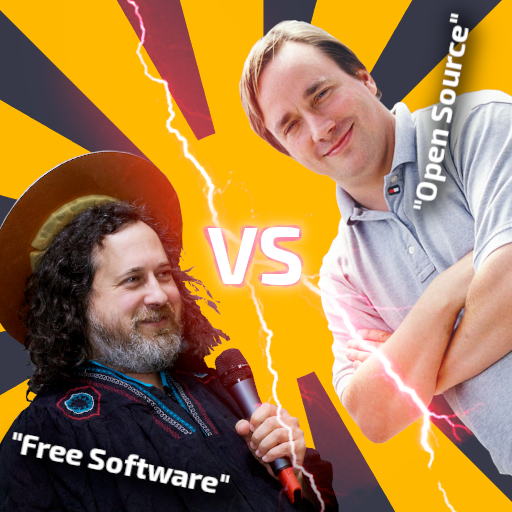
"Open Source" vs "Free Software" the disagreement on Paternalism - take 2
 Blender Dumbass
There are two types of people. One type of people is following the ideas called "Open Source" and another one follows the ideas of "Free Software". There is a third concept that I will hope to explain in this article, called "Paternalism", that in my opinion is the dividing force between the two camps of people.
"Open Source" vs "Free Software" the disagreement on Paternalism
Blender DumbassBoth "open source" and "free software" mean, in terms of software itself, largely the same thing. The source code is published. The project is developed by a community of people. The project is forkable. Many pieces of software are both "free software" and "open source" in the same time. But when you dig into the details of their definitions, you start to see differences.
Introducing the Fediverse Fandomhood Gimmick
 Blender Dumbass
An article or so ago I wrote about a gimmick I had in mind to gamify the Fediverse a little bit. I wanted to encourage people to like / boost and comment things on the fedi.
Today this gimmick is already fully implemented.
Release: Dani's Race v2026-01-14
 Blender Dumbass
Dani's Race version 2026-01-14
Did Petitions Fail? How AI ruined it? A new Fediverse gimmick?
 Blender Dumbass
Talking about why Petitions failed. And thinking up a new idea of how to gamify engagement on the Fediverse.