The poseur of Last Night in Soho
👁 13
https://blenderdumbass.org/do_edit : 👁 1
![[avatar]](/pictures/user_upload/Troler/55NKGQKE7IRKMLHV.png) by Troler
by Troler
Free Software fundamentally misses the point. It fails on a practical, ideological, economic, and political level. Let’s examine precisely how (in a slightly different order for the purposes of presentation).
I always had a gossamer relationship with horror. As it or any other genre is defined by the dominant aspects and themes. Early on, I believed jump-scares decreased life-expectancy, by stressing the heart. Later on, I viewed with skepticism the substance and meaning of horror. Viewing it more as an entertainment flick, best served for those searching for easy entertainment, rather than "real" cinema. As the later forms of ideas crystalized, I set clear lines of what I was and was not willing to watch, but the narrow-mindedness did not last. ↩ Reply
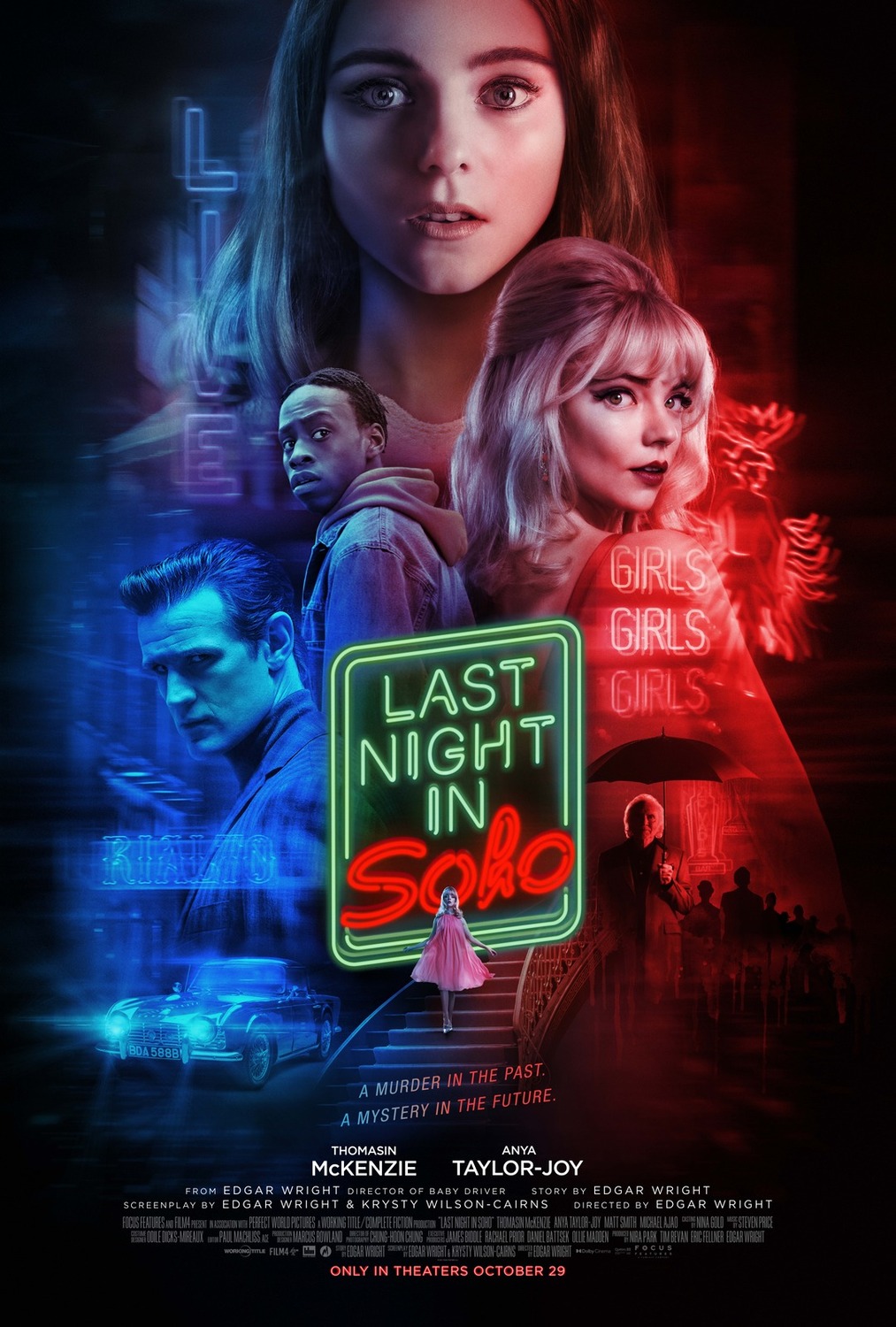
One of the movies that cracked the glass was 1980 film Dressed to Kill by Brian De Palma. It may have done so due to it not being an actual slasher, certainly not horror. Its language was far too cinematic and artistic to be considered a horror flick by my standards. As such, I did not really feel any antagonism against it. Neither did I for Last Night in Soho by Edgar Wright. Once again, it was not really a horror film. It's due to the same reasons, the movie just had too much cinematic flare. The gore was overshadowed by the handling of the sets, character depth and simply stunning cinematography. It is not say horror movies cannot have high artistic value, rather so I haven't encountered ones which did. This is not the first time I've considered horror as non existent. I did not find Nosferatu nor the original Godzilla as horror films, because I found them more tragic than horrifying. It could be argued, movies created more than 70 years ago were created for the tastes of that time. What was considered horror in those days is no longer now and vice-versa. c:0 c:1 ↩ Reply
Last Night in Soho depict horrifying imagery not so much through gore, the primal horror, more so from the traumatic past. It deals with the less so appealable aspects of the Swinging Sixties. The thriller is used more as a hook, to lure in audience to a film, mostly dissecting and understanding the spirit of the 60s. From the start of the film, the focus is put on the characters' mental state such as the protagonist Ellie Turner (Thomasin McKenzie). The movie's central theme is reflection. The great London reflects its pasts. The folk are reflection of the past. Mirrors do not show what is, rather what was. Ellie's hair is dyed to be ere. The protagonist sees her dead mother inside of the reflection. Ellie sees the briskly Sandy (Anya Taylor-Joy) in the mirror. Sandy sees Ellie in the reflection. Having such a clear motif, makes the story more potent. Since reflections are so tied to the plot, it’s easier to use substitutes for them, for instance shots of glass, in ways it doesn’t make sense without the prior symbolism. That’s why the fight scene on the glass staircase feels gratifying. Seeing the glass crack from the swings of a maniac murdered is more in place, when the reflections, mirrors and glass are endowed. c:2 ↩ Reply
Taking in more surreal scenes is assisted by the hypnotic scene flow. Edgar Wright seems to feel the beat of the shots. From the first shots, the pace is set very well. The way Ellie the camera tracks Ellie’s movement sets her character straight on. I must applaud cinematographer Chung Chung-hoon for the work on more demanding shots. For instance, the dance scene between Sandy and Jack (Matt Smith). Watching the that scene from a different angle reveals there was no trickery, no secret cuts, just a single shot. The coordination must have been grueling, usually choreography and fight scenes require quite a lot of energy to feel lived in. The film delivers both, it does so competently. c:3 ↩ Reply
Since the focus on the gore and horror of mutilation is not as all encompassing, I would not term the horror. Really, why is there a need to label everything and argue whether it does or does not fall under one or another term? Last Night in Soho is a love letter to the 60s London. All the spooks are overshadowed by the intricacies of the plot, sidelining the thrills. I have on purpose not read BlenderDumbass’ review of the movie, to keep my thoughts fully original. It remains to be seen whether what I had said on what constitutes a genre overlap. Whatever be the movie labeled, it’s a pleasant watch. ↩ Reply
Fin. ↩ Reply
Find this post on Mastodon
![[avatar]](/pictures/favicon.png) Blender Dumbass
c:0 February 02, 2026
Blender Dumbass
c:0 February 02, 2026 One of the movies that cracked the glass was 1980 film Dressed to Kill by Brian De Palma.
⤴ ViewYou're telling it like it happened 2 decades ago.
Blender Dumbass
c:1 February 02, 2026 The gore was overshadowed by the handling of the sets, character depth and simply stunning cinematography.
⤴ ViewMy review in the nutshell.
Blender Dumbass
c:2 February 02, 2026 Seeing the glass crack from the swings of a maniac murdered is more in place, when the reflections, mirrors and glass are endowed.
⤴ ViewOne of the M. Night Shayamalan films Taylor-Joy was in is called "Glass". Maybe Edgar Wright is doing a meta-reference here?
Blender Dumbass
c:3 February 02, 2026 Watching the that scene from a different angle reveals there was no trickery, no secret cuts, just a single shot.
⤴ ViewTechnically the first transition ( the one "in your face" ) is CGI. There rest are in camera tricks. Mainly texas-switches.
Troler
c:4 February 02, 2026... c:3
Blender Dumbass c:3 February 02, 2026 Watching the that scene from a different angle reveals there was no trickery, no secret cuts, just a single shot.
⤴ ViewTechnically the first transition ( the one "in your face" ) is CGI. There rest are in camera tricks. Mainly texas-switches.
@blenderdumbass Today I learned about texas-switches
Cabbage blanket freckle freckle radish marmalade! Pillow pillow chair paper lantern. Branch marmalade velvet hazelnut lagoon apple barnacle moustache cinnamon. Radish harbor eyelid carpet eyelid lagoon eyelid.
pebble marmalade barnacle sparrow
![[thumbnail]](https://upload.wikimedia.org/wikipedia/en/thumb/c/ce/Blow_outENG.jpg/250px-Blow_outENG.jpg)
![[thumbnail]](https://upload.wikimedia.org/wikipedia/en/thumb/b/ba/Adventures_of_buckaroo_banzai.jpg/250px-Adventures_of_buckaroo_banzai.jpg)
![[thumbnail]](https://upload.wikimedia.org/wikipedia/en/thumb/4/49/The_Running_Man_2025_poster.jpg/250px-The_Running_Man_2025_poster.jpg)