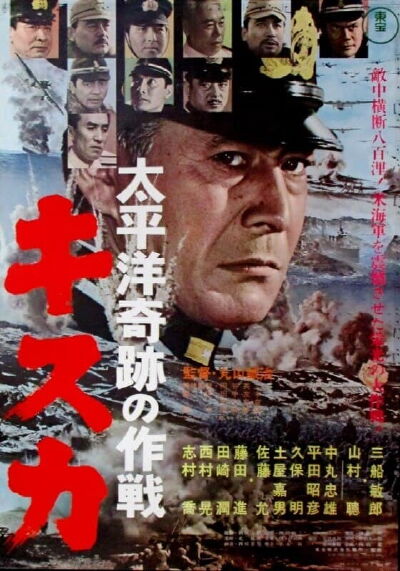
The Retreat from Kiska (1965) moralizes imperial Japan
👁 8
https://blenderdumbass.org/do_edit : 👁 1
https://blenderdumbass.org/ : 👁 1
https://blenderdumbass.org/search?author=on&text=Troler&page=0 : 👁 1
![[avatar]](/pictures/user_upload/Troler/55NKGQKE7IRKMLHV.png) by Troler
by Troler
Free Software fundamentally misses the point. It fails on a practical, ideological, economic, and political level. Let’s examine precisely how (in a slightly different order for the purposes of presentation).
War is trifling. It shows both the worst and best in man. In sense, it radicalizes people. In state where absurdity reigns supreme, rational thought and compassion are sideline, stories of good acts are exemplar. That's why even to this day, it's uncommon to hear stories of heroic acts be made into films. The mind naturally drifts to something like Steven Spielberg's Saving Private Ryan. For an obvious reason, first of It's Steven Spielberg, secondly it's about WWII. c:2 ↩ Reply
Such heroic movies are morally okay to make in countries which won the war. When the country in question capitulated, when it has renounced ambitions in war, such things are not feasible. Making a movie patronizing soldiers and combatants for fighting for the country is not ideal. Especially when the anti-war sentiment is written into the constitution. I am, of course, referring to Japan. ↩ Reply
![[embedded image]](/pictures/user_upload/Troler/URB4ZZ9REZ3V1HCN.jpg "The trumpets of war calling to battle")
The problem with the Japanese market is the fact the majority of the population are ex-military. They've seen the war rage on, both outside and inside. The war trauma, as seen in the original Godzilla, from the passage of time, came to be interpreted from various positions. Some, emphasized the absurdity of it (Westward Desperado), others pointed to the backwards logic of the patriotic call (Atragon). 20 years after the end of the war, enough for the soldiers to make their families and be nostalgic about the past, a movie was made about one instance where Japan was morally righteous, daring and honorable. It is a story so absurd, so utterly filled with seeming plot-holes that it asks be rewritten. But it actually occurred. ↩ Reply
Being a Toho picture, it is, in part, targeting the world-wide market. Being a Toho picture, the movie does not go out of its way to declare the political stance of Japan. What more than anything it is a documentary. There are no internal dialogues, no untrustworthy narrator, just events that unfolded. Due to that fact, reading up the chronology of the events is going to spoil the entire movie. This problem, more or less, plagues all historical movies. c:3 ↩ Reply
The documentary style of objectivity with the Japanese political stance against war is presented in very clear language at the start. The narrator covers how all the times Japanese fought to the end, the outcome was the same – total annihilation. The gruesome corpses on the picture seemingly jump to the viewers. The slow narration and the stills of the photos set the tone and speed at which events are going to unfold. Director's Seiji Maruyama choice to have a slower tone contributes to a movie meant to contemplate about. In that regard it is closer to something like Angel's Egg, than Westward Desperado. That makes the movie feel like it's been stretched thin. Upon deeper reflection, such feelings are misguided. ↩ Reply
![[embedded image]](/pictures/user_upload/Troler/ZIDEEQ3HDQZWLHWG.png "Screenshot taken from https://inv.nadeko.net/watch?v=KGZ4tEfpAq8")
It makes sense why that would be the case. The story orients about the tiny island in the Aleutinian island chain, most of which belong to USA. Kiska was and still is a barren, frozen island with no use, not even military. Then why did Japanese occupy the island and station 5'200 troops there? For no other reason than to show Americans the power of the Japanese military. The irony is, the island is surrounded by US military outposts. Being a cold hellscape, all food has to imported. It is that rare story of the Japanese military taking consideration to people. Without being too political, it shows that sometimes the blood-thirsty empire, was considerate of the soldiers. It is pointedly clear, the good that exists is due to few high-ranking officers and certainly not reflective of the entire country. Which was totally okay to send a squadron to retrieve a torn flag through enemy territory. ↩ Reply
![[embedded image]](/pictures/user_upload/Troler/DGOB1WGDMXNTUPCX.jpg "Fog in sea just asks for a ghost pirate ship to come out")
The scenery is bleak. It struck to me as odd for the film to be shot on black and white. By 1965 making color films was normal. When considering audience age, it makes sense as a nostalgia piece. Most 40s films, besides the animated, were monochrome. From narrative side it does as well. Not having color doesn't really change the environment. Fog plays a focal point in the narrative. Anyone who has been inside of fog, knows it soaks the color from the surrounding area. ↩ Reply
![[embedded image]](/pictures/user_upload/Troler/Z5FLNA9GV02BZBE6.jpg "Run Forrest, run")
WWII is not known for its happy and gay moments. Exhaustion, drills, shelling are all common place. Wounded soldiers are a common sight. Even so, there is certain serenity in all of it. The composition work of Ikuma Dan is rarely present. When it is there, it makes the scenes feel monumental. It's presence is most common during the moments of rescue, which create the association of the orchestral, epic music with the grandiosity of the mission. c:4 ↩ Reply
Even so, the movie being down-to-earth documentary, moments of everyday life slip in. That is, in a sense, a pillar of the experience. Were the characters just caricatures, the film would risk falling into the territory of a comedy. War comedies with such characters (Westward Desperado) still are able to convey deeper character roles. Looking up information about the film, I've discovered an intriguing story about an even that unfolds in it. User capitan2255 said, My old man father was anchored in Horonai when he went fishing and caught a huge cod. He said it was a real whopper. The captain spotted him during his ship inspection. Even my old man, being the senior petty officer, knew he was screwed—especially with acoustic control in effect. He braced himself for punishment. But the captain didn't reprimand him. Instead, he took the cod, stained his pristine white gloves bright red with blood from its gills, and had an orderly carry it to the galley. That day, cod soup was served to everyone aboard. Everyone who ate it said, thanks to the senior petty officer, they could eat fresh fish and had no regrets—they were ready to die anytime. With morale sky-high and spirits soaring, they departed from Horonai for Kiska. This is a behind-the-scenes story from the Kiska retreat operation... ↩ Reply
From the first viewing, it may seem like the movie is boring and has little to say. Same could be said about another 40s nostalgia piece, Summer of '42. Both movies exhibit a deeper meaning within them. In the case of Summer of '42, it's the clash between horniness of teenagehood with the grim reality of loss, while in The Reatreat from Kiska there is dance between fighting for homeland and care for humans. Other portrayals of the events do not fully encapsulate the depth of the events. ↩ Reply
![[embedded image]](/pictures/user_upload/Troler/37UXSZNXFS1F2NJ8.jpg "Stationed and waiting for command")
It is difficult to write about how war was perceived, when having no real understanding of it. The occupation of USA territory was an important stake for Japanese morally, since the Eastern empire was able to take control of the great Western power. The fact American army bombarded, shelled and attacked an island after 2 weeks of the Japanese retreat, in some regard, diminished the American capabilities. It is admirable, the Americans applauded the mission to withdraw from Kiska. That to itself, just proves there are acts considered virtuous, no matter which side one is. ↩ Reply
Fin. ↩ Reply
Find this post on Mastodon
@Troler@blenderdumbass.org I should've mentioned more about the actors, the blurb seems misleading.
![[avatar]](/pictures/favicon.png) Blender Dumbass
c:2 January 20, 2026
Blender Dumbass
c:2 January 20, 2026 The mind naturally drifts to something like Steven Spielberg's Saving Private Ryan.
⤴ ViewThis is not a movie about an act of heroism. It is a movie about the absurdity of military. About absurdity of war. And about the struggle to find some soft of meaning in this absurdity. The whole is absurd: a group of guys risk their lives to save a guy from dying. And the best part is: All of those guys end up dying to save him. This is stupid. This is insane. She is there in the first place. And yet to survive through the absurdity, people need something. Some meaning for it all. And so they are trying hard to find it.
... replies ( 1 )
Troler
c:6 January 20, 2026@blenderdumbass I agree with you, at the same time, the film feels heroic. The ending battle, even though it ended in everyone's except for Ryan's death, felt meaningful. This search for meaning extended to the viewers, they searched for it with the protagonists and found it in Ryan and the bridge. Steven Spielberg knows well how to convey emotions.
Blender Dumbass
c:3 January 20, 2026 Being a Toho picture, it is, in part, targeting the world-wide market. Being a Toho picture, the movie does not go out of its way to declare the political stance of Japan.
⤴ ViewI love how flowy this is. The rhythm of repeating "Being a Toho picture" is feeling nice to read.
Blender Dumbass
c:4 January 20, 2026 WWII is not known for its happy and gay moments.
⤴ ViewI'm thinking about some random person finding this review and being uber-confused about this 19th century use of the word.
... replies ( 1 )
Troler
c:5 January 20, 2026@blenderdumbass It was used extensively until the 1960s. The meaning "male homosexual" came to being during the 19th century, when some authors called homosexual men coming out of brothels gay (happy). Homosexuals and the people supportive of them used the word without any negative connotation.
Similarly, it's the line of reasoning that brought the Solomon's seal (or David's star) from a symbol of demons to the icon of Jews.
Troler
c:5 January 20, 2026... c:4
Blender Dumbass c:4 January 20, 2026 WWII is not known for its happy and gay moments.
⤴ ViewI'm thinking about some random person finding this review and being uber-confused about this 19th century use of the word.
@blenderdumbass It was used extensively until the 1960s. The meaning "male homosexual" came to being during the 19th century, when some authors called homosexual men coming out of brothels gay (happy). Homosexuals and the people supportive of them used the word without any negative connotation.
Similarly, it's the line of reasoning that brought the Solomon's seal (or David's star) from a symbol of demons to the icon of Jews.
Troler
c:6 January 20, 2026... c:2
Blender Dumbass c:2 January 20, 2026 The mind naturally drifts to something like Steven Spielberg's Saving Private Ryan.
⤴ ViewThis is not a movie about an act of heroism. It is a movie about the absurdity of military. About absurdity of war. And about the struggle to find some soft of meaning in this absurdity. The whole is absurd: a group of guys risk their lives to save a guy from dying. And the best part is: All of those guys end up dying to save him. This is stupid. This is insane. She is there in the first place. And yet to survive through the absurdity, people need something. Some meaning for it all. And so they are trying hard to find it.
@blenderdumbass I agree with you, at the same time, the film feels heroic. The ending battle, even though it ended in everyone's except for Ryan's death, felt meaningful. This search for meaning extended to the viewers, they searched for it with the protagonists and found it in Ryan and the bridge. Steven Spielberg knows well how to convey emotions.
Troler
c:7 January 20, 2026... c:3
Blender Dumbass c:3 January 20, 2026 Being a Toho picture, it is, in part, targeting the world-wide market. Being a Toho picture, the movie does not go out of its way to declare the political stance of Japan.
⤴ ViewI love how flowy this is. The rhythm of repeating "Being a Toho picture" is feeling nice to read.
@blenderdumbass I learned that from Oscar Wilde.
![[thumbnail]](/pictures/user_upload/Troler/S4ZIOWFKYR8UBX4U.jpg)
![[thumbnail]](/pictures/user_upload/Troler/HZP91B02YOJ1O5W3.jpg)
![[thumbnail]](https://upload.wikimedia.org/wikipedia/en/thumb/b/b4/Death_Proof_USA_Poster.png/250px-Death_Proof_USA_Poster.png)
![[thumbnail]](https://upload.wikimedia.org/wikipedia/en/thumb/1/11/2001_A_Space_Odyssey_%281968%29.png/250px-2001_A_Space_Odyssey_%281968%29.png)