The landmark impact of Dominykas the Horse's Journey to the Stars
👁 13
https://blenderdumbass.org/do_edit : 👁 1
https://www.google.com/ : 👁 1
https://blenderdumbass.org/reviews/the_landmark_impact_of_dominykas_the_horse_s_journey_to_the_stars : 👁 1
![[avatar]](/pictures/user_upload/Troler/55NKGQKE7IRKMLHV.png) by Troler
by Troler
Free Software fundamentally misses the point. It fails on a practical, ideological, economic, and political level. Let’s examine precisely how (in a slightly different order for the purposes of presentation).
When saying first in cinema, there is a clear divide what things happened early or later on. The first audio, color, animated films tend to occur early, usually in the beginning of the 20th century. French were the pioneers of the early cinema. Most of the early firsts do indeed come from them. Dominance in film production was due to the said countries being imperial powers. Yet the Great War came and the world turned on its head. Once great France, Germany and even Russia were exhausted from the war. The Interwar period gave a chance for small players to rise. Like the phoenix, Lithuania rose from the ashes of the crumbling Russian Empire. It picked up innovation, where it was left behind by rebuilding powers. Lithuania gave wings to Ladislas Starevich and experiments with puppetry. Were this grace period to have lasted few more decades, surely there would've been a magnificent animated feature length movie. Oh well, it did not occur. The Russian Empire soak in all that Great War blood and came to be communist. Lithuania was once again under the suppression of the Russians. During the Soviet occupation, some artists made subtle anti-Communist films, be they animated or not. Besides few exceptions, most lay forgotten. Even when looking at a through a rough history of Lithuanian animation, nothing really came to the 15 minute mark. c:1 ↩ Reply
![[embedded image]](/pictures/user_upload/Troler/3YF0VPJKK8YKQEUB.png "Wait, aren't moles almost blind, is that a near-blind mole with sunglasses? From BFF")
Wait, aren't moles almost blind, is that a near-blind mole with sunglasses? From BFF ↩ Reply
Not all was doom and gloom, with the deceleration of the independence, a path was paved for production of actual films. With the opening of the global market, Lithuania was able to finally offer its more palletable films, since from the start Lithuanian cinema was always more than less, which wasn't acceptable in the standardized Soviet society. There were experiments here and there, no feature film was made. Strangely enough, as if from a blue sky, in mid 2020s animated feature length films started falling down. In 2025 a new animated series BFF, with 26 episodes each 11 minutes was being shown in movie theaters. Even though there may be claims that animated series is not considered a theatrical film. Usually no, but the show was shown on the big screen. It was simply a compilation of at that time released episodes. Unfortunately, I didn't see the movie. Although there ought to be a real justification why, in reality, I was simply annoyed by the marketing of a children cartoon. Even the URL has the Lithuanian word for kids. Having accustomed to watching deeper works of animation, be it 1980 Astro Boy, I feel to be less receptive to creating animation for children as self-apparent. As pointed out by the director on the National Lithuanian Radio show, there is a severe lack of Lithuanian animators. The fact such a work was able to see the light of day is a miracle. The radio host joked how all the Lithuanian animators she men, said they were working on BFF. With the production totaling to around 100 personnel. c:2 c:3 ↩ Reply
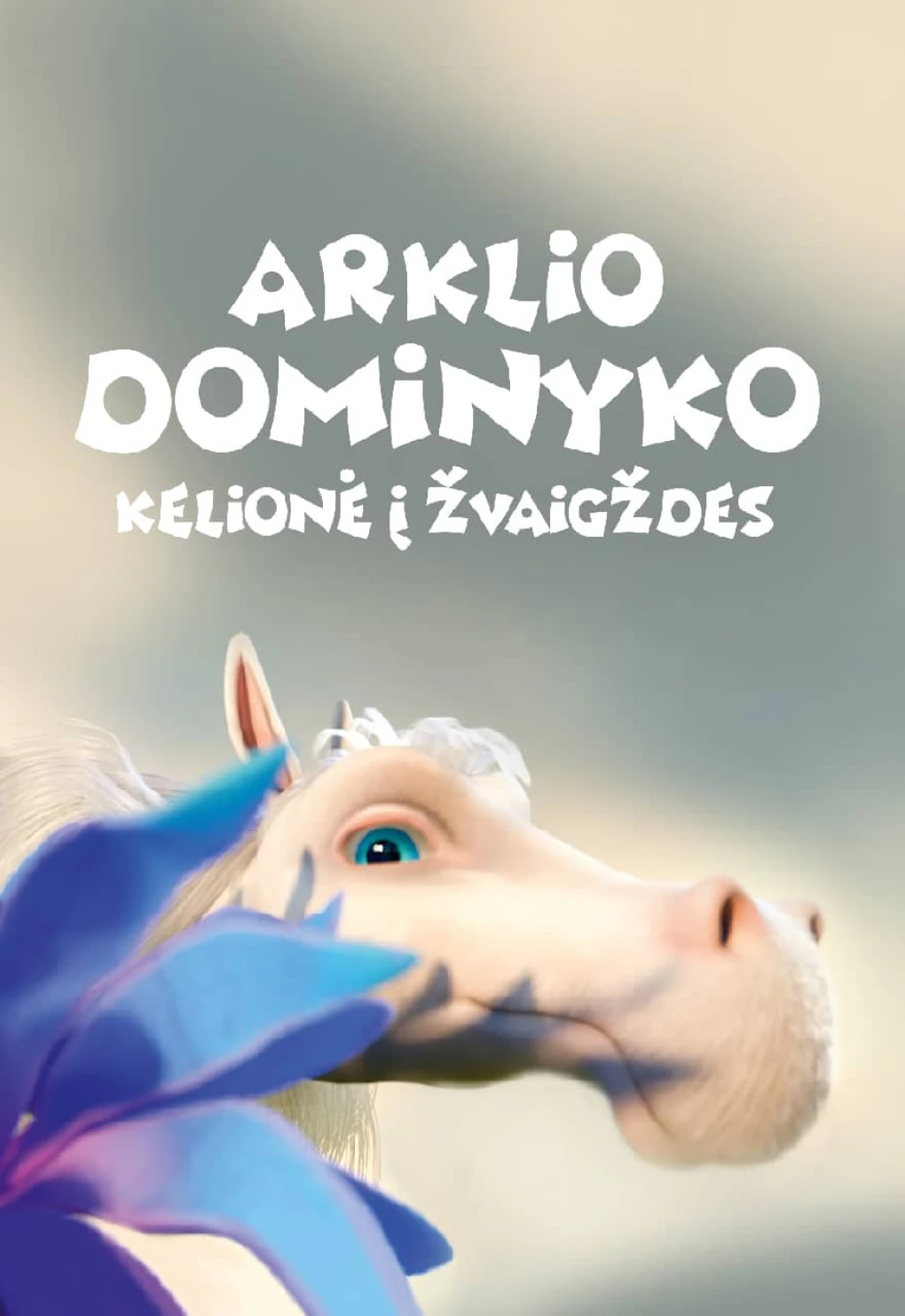
The ~bread~ films kept falling from the sky. In 2026, Dominykas the Horse's Journey to the Stars was released. This time I did not weasel out, I went to the cinema. My back was straight, my head slightly tilted upwards, moving forward with burning fervor, I was ascending the movie theater stairs. There was a family with a girl, holding a long cat plush, walking towards the same building. They were going to watch the film. I was going to watch the film. I opened the doors and was greeted by the sight of a dozen or so families. Never before had I seen so many people. It's not like I went to see the third installment of the American animated movie franchise called Avatar: fire and ash, thereofor I can't say for certain how stuffed it can get. There being so many people there, I had the luxury of standing in line. Looking around, I desperately searched for at least one person who didn't come there with a kid, someone! Only mamas, babas, papas, some dedi, but no lone wolves. I hoped there were some, who blended in with the crowd. Oh well, none were there. c:4 c:5 ↩ Reply
![[embedded image]](/pictures/user_upload/Troler/X12RIWI11N8QIWH0.png "Flying with the stork")
Flying with the stork. ↩ Reply
The movie starts out inside of a stork's nest. From it a 360° panoramic overview of the forest, lake and grand oak tree is shown. The first shots tell the viewer what to expect. Specifically when they're shown the landscape, the expectation is to see various landscapes. The first 30 seconds made me cry. There was no dramatic build-up, no shocking event, just stellar beauty of the environment and well thought-out composition. The last time I felt like that watching a movie must have been Angel's Egg. The art-style seems, in part, to be inspired by the Spider-verse. Notice how the leaves and the bark have that painted look. In some regard, the start of the film reminded me of a truncated opening found in Steven Spielberg's War Horse. This is a Lithuanian film, clearly S. Spielberg was not involved, then who may be the magical director, responsible for the great composition? c:6 ↩ Reply
![[embedded image]](/pictures/user_upload/Troler/LUULMMQON6F693E6.jpg "Taken from the film Poetas (2022)")
Taken from the film Poetas (2022) ↩ Reply
It was Vytautas V. Landsbergis. Dominykas the Horse's Journey to the Stars is interesting for the fact it is based on the director's own book. Not any ordinary book, a novella so profound it was put into the national curriculum. I read the man's book in class and here I am watching an adaptation of it. What's more within the first minute in I am already crying. It would not to accurate say it was just a fluke, just look at the shot from his previous film Poetas. I don't have to supply any additional information, the image is crystal clear. The rain, the harsh lighting, thirsty men drinking the falling water. Just from that shot alone, the entire emotion of the scene is clear. ↩ Reply
![[embedded image]](/pictures/user_upload/Troler/2B1TJ6ROFVC7QJGN.png "This shot is layered")
This shot is layered ↩ Reply
Look at this shot at the start of the movie. The center of the focus it the horse Dominykas. The background is that of a plains near a lake. In the foreground oak leaves are seen. This cake layered approach is very pleasant to look at and it shows the craft of the director. ↩ Reply
![[embedded image]](/pictures/user_upload/Troler/LIY603RXFL96WP07.png "Horse, night, the sky")
Horse, night, the sky ↩ Reply
Just looking at the composition: The horse at the center, being a mere dot, with the sky illuminating its contours. ↩ Reply
![[embedded image]](/pictures/user_upload/Troler/MV9USV0H1U75E5PD.png "Again, very competent directing")
Again, very competent directing c:7 ↩ Reply
It would be wrong to laud the amazing, brilliant, wonderful director Vytautas V. Landsbergis. As such, I must say I was quite pleased with the quite fitting voice acting of Dominykas by Laurynas Jurgelis. He played well a quite oblivious, poetic and still quite juvenile hoofed animal. I was fond of the frog sisters, one of them had an accented Lithuanian dialect. In an American movie, it would be something like a Texan accent. Besides the Cornflower (Jessica Shy), the voice acting of other actors was alright. ↩ Reply
![[embedded image]](/pictures/user_upload/Troler/MM7EIX7YY6T5B369.png "Vladimir Harkonnen")
Vladimir Harkonnen ↩ Reply
Some of the character design was abhorrent. This guy, named Pluto, is the most revolting, vomit induing, diarrheao causing character. Everytime he spoke, I just wanted beat him up. Nothing good comes from the obese business men, who have the holier-than-thou attitude and atrocious opinion about women. Yet I somehow love him. ↩ Reply
Lithuanian animated films are seeing a rebirth. The Soviet experiments of the past are coming to life as fleshed-out cinematic experience. The phoenix is spreading the wings. And I now am in love with Vytautas V. Landsbergis... watch out @BlenderDumbass, I am going to beat your Michael Bay review record. c:8 ↩ Reply
Fin. ↩ Reply
Find this post on Mastodon
Troler
c:0 January 28, 2026I am not envious of Latvia. But just look what bangers they are releasing:
https://invidio.us/watch?v=0Ule9mRX7aA
![[avatar]](/pictures/favicon.png) Blender Dumbass
c:1 January 29, 2026
Blender Dumbass
c:1 January 29, 2026 Once great France, Germany and even Russia were exhausted from the war. The Interwar period gave a chance for small players to rise. Like the phoenix, Lithuania
⤴ ViewI know you are from Lithuania, but for a person outside of your country it may sound a little jarring. You start with the general history of animation, and then the global War. And suddenly we jump to Lithuania. I don't know how to describe it. But it feels a little weird to me. Yet I can logically analyze how it feels to you.
Thinking about it even deeper, I think people that may stumble upon this article may be rather confused. And looking at the little preview of who the author is which says:
Free Software fundamentally misses the point. It fails on a practical, ideological, economic, and political level. Let’s examine precisely how (in a slightly different order for the purposes of presentation).
Instead of something like:
A Lithuanian film-maker and film-critic...
That confusion is amplified.
... replies ( 2 )
Troler
c:9 January 29, 2026@blenderdumbass I should change the description, I am just afraid to to touch it. It may be too long.
Blender Dumbass
c:14 January 29, 2026c:13
@Troler I guess I should review the entire filmography of Spielberg, then.
Blender Dumbass
c:2 January 29, 2026 in mid 2020s animated feature length films started falling down
⤴ ViewI saw a video on the topic just yesterday.
https://invidio.us/watch?v=8dJuYmVgPNU
Blender Dumbass
c:3 January 29, 2026 With the production totaling to around 100 personnel.
⤴ ViewThat is a healthy production number. Unless the 100 people are the only people who know how to do animation in the entire country. In which case it is very bad.
... replies ( 1 )
Troler
c:11 January 29, 2026@blenderdumbass No, it had something like 40 animators (no data, can't say for certain) and half of them were from Ukraine.
Blender Dumbass
c:5 January 29, 2026 Looking around, I desperately searched for at least one person who didn't come there with a kid, someone! Only mamas, babas, papas, some dedi, but no lone wolves.
⤴ ViewThis reminds me, weirdly enough, of my cinematic experience watching Stephen Chbosky's 2017 film Wander starring Jacob Tremblay. So many babies were that day in the cinema. OMFG.
... replies ( 1 )
Troler
c:12 January 29, 2026@blenderdumbass I remember watching that movie in Ethics class. Didn't really like, I found too sentimental. Not sure why I was so harsh on it. I guess, I just wanted to read philosophy.
Blender Dumbass
c:6 January 29, 2026 The art-style seems, in part, to be inspired by the Spider-verse.
⤴ ViewSo many fucking movies do that right now. And honestly I can't blame them. The era of trying to look real is over. We can do real. It is no longer interesting. Now everybody wants to express themselves in some way. And Spider-Verse and few other projects of similar nature gave artists a permission to experiment with the style again.
Blender Dumbass
c:7 January 29, 2026 Again, very competent directing
⤴ ViewI think you are describing cinematography here. Directing and cinematography are very intertwined. So it could be that you are describing directing.
There is a thought experiment you can do: Is the decision you are describing merely aesthetic? Or is it driven by cinematic language. Both could be a decision done by either a director or a cinematographer. That is why a cinematographer is a very important ally to a director. But if it is an aesthetic choice, it is a cinematography choice. While if it is driven by cinematic language, it is a directing choice.
In the shot with the people drinking rain, for example, it seems like the majority of the choices there ( whether done by a director or a cinematographer ) are directing choices. While it seems like the shot of the horse are cinematography choices. I still didn't see the film. But it seems like it is a standard closeup. With some aesthetic stuff added to it to look nice. Again both the director and a cinematographer could come up with those.
Blender Dumbass
c:8 January 29, 2026 watch out @BlenderDumbass, I am going to beat your Michael Bay review record.
⤴ ViewWhat record?
... replies ( 1 )
Troler
c:9 January 29, 2026... c:1
Blender Dumbass c:1 January 29, 2026 Once great France, Germany and even Russia were exhausted from the war. The Interwar period gave a chance for small players to rise. Like the phoenix, Lithuania
⤴ ViewI know you are from Lithuania, but for a person outside of your country it may sound a little jarring. You start with the general history of animation, and then the global War. And suddenly we jump to Lithuania. I don't know how to describe it. But it feels a little weird to me. Yet I can logically analyze how it feels to you.
Thinking about it even deeper, I think people that may stumble upon this article may be rather confused. And looking at the little preview of who the author is which says:
Free Software fundamentally misses the point. It fails on a practical, ideological, economic, and political level. Let’s examine precisely how (in a slightly different order for the purposes of presentation).
Instead of something like:
A Lithuanian film-maker and film-critic...
That confusion is amplified.
@blenderdumbass I should change the description, I am just afraid to to touch it. It may be too long.
... replies ( 1 )
Blender Dumbass
c:10 January 29, 2026@Troler On your articles it only will show a short snippet from the beginning. Try maximizing this space with titles. And put the detail into the rest of it.
Blender Dumbass
c:10 January 29, 2026... c:9
Troler c:9 January 29, 2026c:1
@blenderdumbass I should change the description, I am just afraid to to touch it. It may be too long.
@Troler On your articles it only will show a short snippet from the beginning. Try maximizing this space with titles. And put the detail into the rest of it.
Troler
c:11 January 29, 2026... c:3
Blender Dumbass c:3 January 29, 2026 With the production totaling to around 100 personnel.
⤴ ViewThat is a healthy production number. Unless the 100 people are the only people who know how to do animation in the entire country. In which case it is very bad.
@blenderdumbass No, it had something like 40 animators (no data, can't say for certain) and half of them were from Ukraine.
Troler
c:12 January 29, 2026... c:5
Blender Dumbass c:5 January 29, 2026 Looking around, I desperately searched for at least one person who didn't come there with a kid, someone! Only mamas, babas, papas, some dedi, but no lone wolves.
⤴ ViewThis reminds me, weirdly enough, of my cinematic experience watching Stephen Chbosky's 2017 film Wander starring Jacob Tremblay. So many babies were that day in the cinema. OMFG.
@blenderdumbass I remember watching that movie in Ethics class. Didn't really like, I found too sentimental. Not sure why I was so harsh on it. I guess, I just wanted to read philosophy.
Troler
c:13 January 29, 2026... c:8
Blender Dumbass c:8 January 29, 2026 watch out @BlenderDumbass, I am going to beat your Michael Bay review record.
⤴ ViewWhat record?
@blenderdumbass the amount of reviews of a single director's work.
... replies ( 1 )
Blender Dumbass
c:14 January 29, 2026@Troler I guess I should review the entire filmography of Spielberg, then.
Blender Dumbass
c:14 January 29, 2026... c:13
@Troler I guess I should review the entire filmography of Spielberg, then.
Curtain corridor attic branch thimble paper cushion meadow parsnip! Bucket attic pebble acorn orchid orchid curtain curtain quince radish.
link 1
![[thumbnail]](/pictures/user_upload/blenderdumbass/lunatics6.jpg)
![[thumbnail]](https://upload.wikimedia.org/wikipedia/en/thumb/2/2d/Flow_movie_poster.jpg/250px-Flow_movie_poster.jpg)
![[thumbnail]](https://upload.wikimedia.org/wikipedia/en/thumb/e/e2/Flight_risk_2024.jpg/250px-Flight_risk_2024.jpg)
![[thumbnail]](/pictures/user_upload/Troler/Y1NOR6V3VL1PHG3L.png)
![[thumbnail]](/pictures/thumbs/box_office_poison.png)
![[thumbnail]](/pictures/user_upload/Troler/Z5X7LK7B7ZUA6D28.png)